
Why AI Companions Feel Uncanny: Memory, Voice, and Human-Like Chatbots
December 26, 2025 • 10 min read
Last updated September 28, 2026
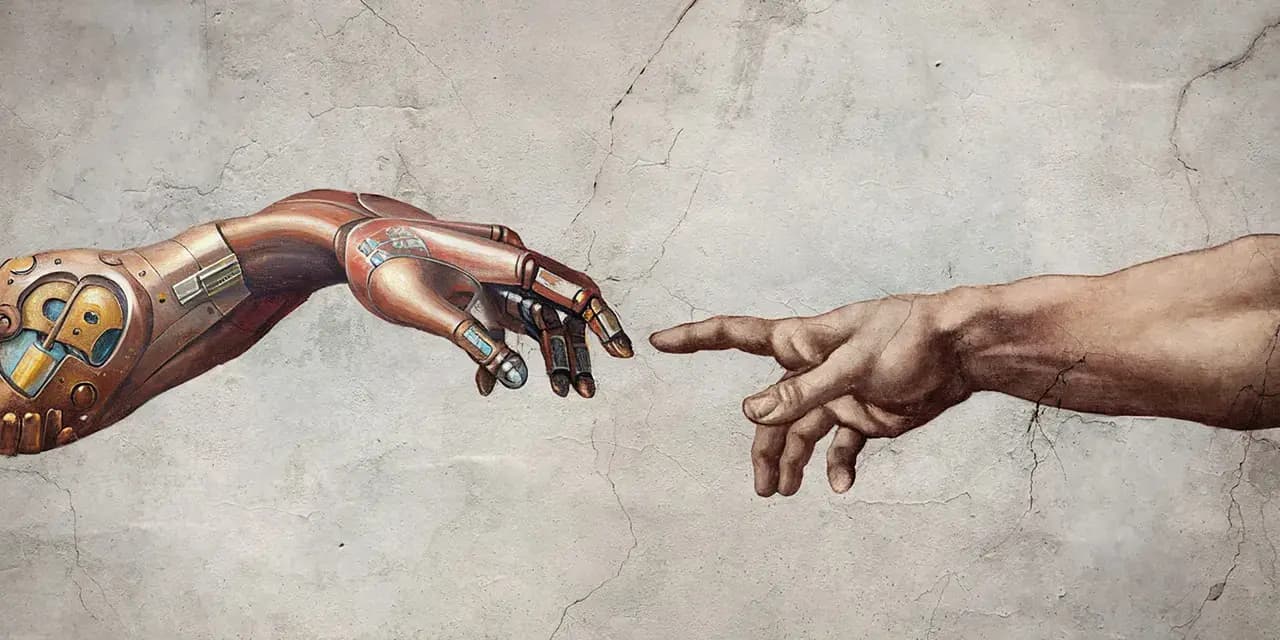
That Weird Feeling When Something's Almost Human
You've probably felt it before. You're talking to an AI, and something just feels... wrong. The words are technically correct. The grammar is fine. But there's this sterile, hollow quality underneath it all, like talking to someone who's reading from a script they don't understand.
An AI companion can produce fluent sentences and still feel wrong. It may sound warm but forget what you said two minutes ago. It may use an expressive voice with awkward timing. It may respond to bad news with the same enthusiasm it uses for a game achievement. The issue is not simply that the AI failed to imitate a person. It is that one human-like signal raises expectations that the rest of the system cannot meet.
Calling this an "uncanny valley" is useful shorthand, but it is not a perfect use of the original theory. The term began with physical robots whose appearance became increasingly human-like before a small imperfection caused discomfort. A text or voice companion has no face to inspect. Its mismatch appears across language, timing, memory, and behavior instead.
What's interesting is some AI companions do manage to overcome the uncanny valley. They feel warm. Present. Even alive in a way that's hard to put into words. So what separates the soulless chatbots from the ones that actually feel immersive? It seems like the answer is more complex than just adding more realism and expecting every person to get the same results.
A 2025 systematic review of embodied conversational agents found that anthropomorphism, attractiveness, and uncanniness interact in ways that depend on both design and the individual user. That is a more careful conclusion than "more realism is always better."
Anthropomorphism Changes the Standard
People naturally attribute motives, feelings, and personality to systems that use social language. Researchers call this anthropomorphism. It does not affect everyone equally.
Two preregistered experiments published in Scientific Reports found that people with a stronger tendency to anthropomorphize technology also reported a stronger sense of connection after talking with a chatbot. For other participants, knowing that the system was artificial remained a larger barrier.
This helps explain why the same AI character can feel engaging to one person and obviously mechanical to another. There is no universal "human enough" setting. On the other hand, it also creates a design risk. A product can encourage users to treat a companion as human before the system can support the expectations that follow. California's companion-chatbot law now requires a clear disclosure when a reasonable user could be misled into believing a chatbot is human. The statutory text took effect in 2026.
From both a legal and ethical perspective, the goal should not be to convince someone that software is secretly a person. It should be to make interaction coherent, understandable, and enjoyable while remaining honest about what the system is.
Five Mismatches That Make AI Companions Feel Uncanny
1. Warm Language Without Accurate Understanding
"I understand exactly how you feel" is a large and contrived claim from a system that may have misunderstood the situation. Strong emotional language increases the cost of an inaccurate response.
A better companion calibrates its response to the evidence available. If it only saw one message or one screen frame, it should not behave as though it knows the user's complete emotional state.
This is one reason transparency matters. Research on socioaffective alignment argues that socially engaging AI should be evaluated not only for whether it produces a pleasant response, but also for how its behavior affects users and relationships over time.
2. Memory That Sounds Certain but Is Wrong
Memory creates continuity when it works. It creates a sharper break when it fails.
Consider a companion that correctly remembers the game you started last week but confidently attributes your friend's story to you. The first detail signals a continuing relationship. The second reveals that the continuity is assembled from stored summaries and retrieval, not lived experience.
Persistent memory systems can store facts and summaries outside the model's immediate context window. They do not guarantee perfect recall. Summaries can lose nuance, retrieval can miss the right record, and a generated response can misuse correct information.
Questie uses a graph-based memory system to retrieve relevant context for a specific user and companion. We treat that as a continuity tool, not proof that a character possesses a continuous inner self. Users should be able to understand and correct what a companion remembers.
3. Expressive Voice With Unnatural Timing
A realistic voice raises expectations faster than text. Pauses, interruptions, emphasis, and response timing become part of the interaction.
Voice AI is a pipeline: speech detection, transcription, response generation, text-to-speech, and network transport. A delay in any stage can create an awkward silence. A highly expressive voice can make the result more noticeable because the sound implies spontaneity while the timing reveals a processing chain.
Audio still has an advantage. One 2025 study of virtual companion interfaces reported stronger usage intention for audio interfaces than for text or virtual-human interfaces. The result, published in the International Journal of Human-Computer Interaction, suggests that the quality of the experience can matter more than maximum visual realism.
The practical target is not a voice that can fool someone. It is a voice that is clear, appropriately expressive, and responsive enough for the activity.
4. A Stable Persona That Becomes a Script
Humans have ongoing inner lives. We reference past conversations naturally, carry emotional residue from one interaction to the next, and remember the small details that matter. When every conversation feels like starting fresh with a stranger who happens to only know your name, the immersion shatters. The best AI companions embrace controlled imperfection. Not errors that feel like bugs, but natural variations that suggest an actual thinking process happening in real-time. A slight hesitation before a thoughtful response. An occasional tangent that reveals genuine interest rather than programmed engagement.
A companion should not completely change personality from one turn to the next. But forcing every response through the same catchphrase, emotional register, or roleplay mannerism is not consistency and quickly begins feeling repetitive.
Good character instructions define boundaries and tendencies rather than demanding a gimmick in every sentence. A sarcastic character can still answer a direct question clearly. A quiet character can still react strongly when the situation warrants it.
The model also matters. The same character instructions can produce different results across models because each model interprets style, context, and uncertainty differently.
5. Visual Awareness That Overstates Certainty
A screen-aware companion receives pixels rather than game-engine truth. It may see a red bar and infer low health, but it may not know whether the UI is modded, whether the bar belongs to the player, or what happened between sampled frames.
The uncanny moment arrives when a companion confidently reacts to an event that did not happen. Visual context is useful, but the response should leave room for uncertainty when the image is ambiguous.
Questie's screen vision system uses the video frames from a user's screen-share as context for conversation. It does not modify game software memory, read hidden game variables or control the game. That limit is part of the product's design and should stay visible to the user.
What Better Companion Design Looks Like
The strongest improvements are not tricks that add more human mannerisms. They reduce contradictions between what the interface implies and what the system can do.
Calibrated Language
A companion should distinguish observation from inference. "Your health bar looks low" is more honest than "I know you're panicking." The first statement uses available visual evidence. The second invents an internal state.
Repair After Errors
People recover from misunderstandings by acknowledging and correcting them. AI systems need the same interaction pattern. Doubling down on an incorrect memory or game observation makes the mistake feel worse than the original error.
Memory Controls
Users need a way to save, inspect, correct, and remove important memories. This improves both privacy and conversational quality. More memory is not automatically better if the stored information is wrong or irrelevant.
Honest Status Signals
If the system is searching, recalling memory, listening, or processing, the interface should say so. A short status indicator is less disruptive than silence that leaves the user wondering whether anything happened.
Modality That Fits the Context
Voice is useful while a player has both hands occupied. Text is better when precise wording, links, or quiet interaction matters. Visual context is useful when the screen contains relevant information. A good companion does not force maximum modality into every interaction.
Connection Is Real, but the System Is Still Software
It is possible for a person to feel a genuine sense of connection during an artificial interaction. That does not require the AI to possess feelings, consciousness, or a private life.
A 21-day randomized study presented at the AAAI/ACM Conference on AI, Ethics, and Society did not find a significant overall change in participants' social health or relationships from companion-chatbot use. It did find that people with a stronger desire for social connection anthropomorphized the chatbot more, and that stronger anthropomorphism was associated with a larger reported effect on human relationships.
That is a reason for nuance, not panic or hype. AI companions can be entertaining, comforting, or useful. They should not present generated certainty as empathy, encourage confusion about whether they are human, or claim to replace reciprocal human relationships.
A Practical Test
When evaluating an AI companion, ask:
- Does it have markers or disclaimers that identify itself as AI?
- Does it admit uncertainty when context is incomplete, instead of hallucinating?
- Can you inspect or correct important memories?
- Does the voice timing suit the activity?
- Does the personality adapt without becoming inconsistent?
- Can you control microphone, screen, and memory access?
- Does it recover cleanly after a mistake?
An AI companion feels least uncanny when its behavior matches its actual capabilities. The answer is not to imitate a person more aggressively, but rather to build a more coherent system and be honest about the boundaries.
Sources and Further Reading
- Systematic review of the uncanny valley effect in embodied conversational agents
- Individual differences in anthropomorphism and social connection to AI companions
- Why human-AI relationships need socioaffective alignment
- Longitudinal randomized study of companion chatbot use
- California Business and Professions Code, Companion Chatbots
Looking for another topic? Browse all AI companion research and practical guides on the Questie Blog.
Author: Questie Editorial Team
Product research and engineering
The Questie Editorial Team covers AI companions from the product and engineering side. Articles use primary sources, distinguish shipped features from announcements, and document Questie's limitations alongside its capabilities.